Bambu Lab Strategic Brand Analysis
Bambu Lab(Amazon storefront) has emerged as the dominant force in the global consumer-grade 3D printing market, achieving what industry analysts consider the most rapid market share capture in additive manufacturing history. Founded in 2020 by former DJI engineers and led by Dr. Ye Tao, the Shenzhen-based company has grown from a Kickstarter startup to a market leader commanding 37% of the global entry-level 3D printer segment within just five years.

In 2024, Bambu Lab generated approximately RMB 6 billion (USD 850 million) in revenue with a shipment volume of 1.2 million units, achieving a market share of approximately 29% in the global consumer-grade 3D printer market.
The company's net profit exceeded RMB 2 billion, demonstrating exceptional unit economics and operational efficiency that rivals technology industry benchmarks.
Our analysis reveals five critical insights that define Bambu Lab's competitive position and strategic trajectory:
- Technology Leadership:Bambu Lab's proprietary CoreXY motion system, AI-powered LiDAR calibration, and integrated AMS multi-material system have established new performance benchmarks for consumer-grade 3D printing. The company's engineering heritage from DJI has enabled the migration of drone technology including brushless motors, vibration compensation algorithms, and precision motion control to desktop manufacturing.
- Ecosystem Moat:The MakerWorld platform has accumulated 50 million registered users with over 10 million monthly active users as of December 2025. This content ecosystem, combined with Bambu Studio slicer software and Bambu Handy mobile app, creates a vertically integrated user experience that competitors struggle to replicate.
- Manufacturing Advantage:Shenzhen's mature supply chain ecosystem provides Bambu Lab with access to 80% of core components within a two-hour procurement radius. This geographic concentration enables rapid iteration cycles and cost advantages that Western manufacturers cannot match.
- Competitive Disruption:Bambu Lab's ascent has fundamentally altered the competitive dynamics of the 3D printing industry. Creality, the former market leader, has seen its market share decline from 47% in Q2 2024 to approximately 20% by Q1 2026, prompting a Hong Kong IPO filing to raise defensive capital.
- Strategic Risks:Patent litigation initiated by Stratasys through the US International Trade Commission poses a potential import ban risk. Tariff uncertainties related to US-China trade relations could impact pricing competitiveness in the largest regional market. Additionally, the company's closed-ecosystem approach has generated community tensions with open-source advocates.
The global 3D printing market reached approximately USD 29.3 billion in 2025 and is projected to grow to USD 152.7 billion by 2035, representing a compound annual growth rate (CAGR) of 17.96%. Within this broader market, the consumer-grade segment specifically valued at USD 1.56 billion in 2024 is forecasted to expand to USD 9.7 billion by 2033, at a CAGR of 22.6%.
The entry-level segment (systems priced below USD 2,500) has emerged as the primary growth engine, accounting for 48% of global 3D printer revenues in Q2 2024. Shipments in this category surged 47% year-over-year in Q4 2025, driven by Chinese manufacturers who collectively control over 90% of global entry-level shipments.
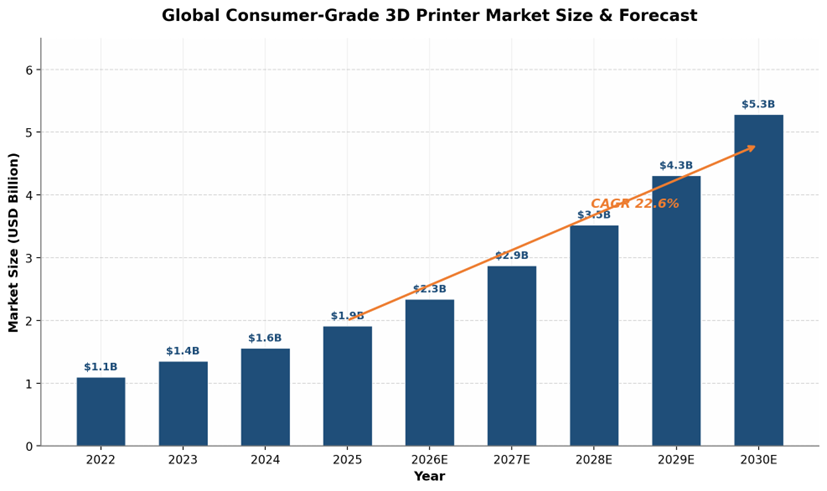
Figure 1: Global Consumer-Grade 3D Printer Market Size and Forecast (2022-2030)
North America leads global unit sales with approximately 38% market share, driven by strong educational integration and a thriving maker economy. The United States alone accounted for USD 1.61 billion in personal 3D printer sales in 2024. Europe represents 28% of the market, with Germany emerging as the dominant regional hub for additive manufacturing adoption.
Asia-Pacific accounts for 25% of global sales but represents the fastest-growing region, supported by China's domestic market expansion and government-backed initiatives for advanced manufacturing. Chinese manufacturers including Bambu Lab, Creality, Anycubic, and Elegoo collectively hold approximately 95% of the global entry-level market, a concentration that underscores the country's manufacturing ecosystem advantages.
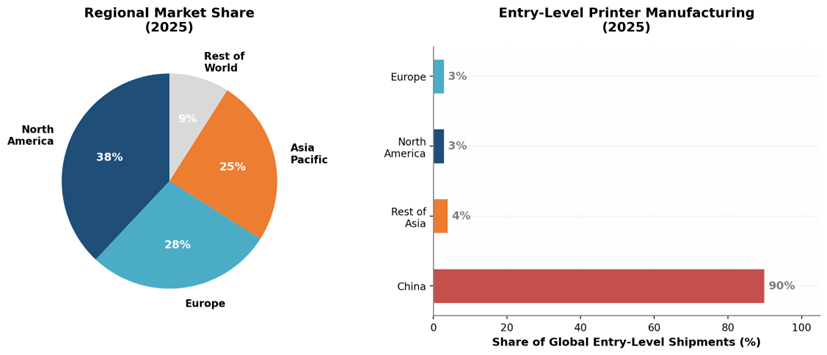
Figure 2: Regional Market Distribution and China's Manufacturing Dominance
Bambu Lab was established on November 9, 2020, in Shenzhen's Qianhai Shenzhen-Hong Kong Cooperation Zone. The founding team comprising Tao Ye, Gao Xiufeng, Liu Huaiyu, Chen Zihan, and Wu Wei were all former members of DJI's core consumer drone division. Dr. Tao Ye, who served as head of DJI's consumer drone department for eight years, leads the company as Founder and CEO.
This DJI heritage has profoundly shaped Bambu Lab's engineering philosophy and execution capabilities. The team systematically migrated key technologies from consumer drones to desktop 3D printers, including brushless motors, LiDAR sensing systems, multi-camera arrays, and resonance control algorithms. This technology transfer has enabled Bambu Lab to achieve industrial-grade precision and reliability at consumer price points.
The company has established dual R&D centers in Shenzhen and Shanghai covering mechanical design and motion control, plus an overseas office in Austin, Texas. As of March 2025, Bambu Lab employed 318 staff members enrolled in social insurance, with significant expansion ongoing. The company holds 136 patents, 160 registered trademarks, and 10 software copyrights.
Bambu Lab's financial trajectory represents one of the most rapid value creation stories in hardware technology. The company's revenue grew from effectively zero in 2021 to an estimated RMB 10 billion (USD 1.4 billion) in 2025, achieving profitability within two years of product launch.
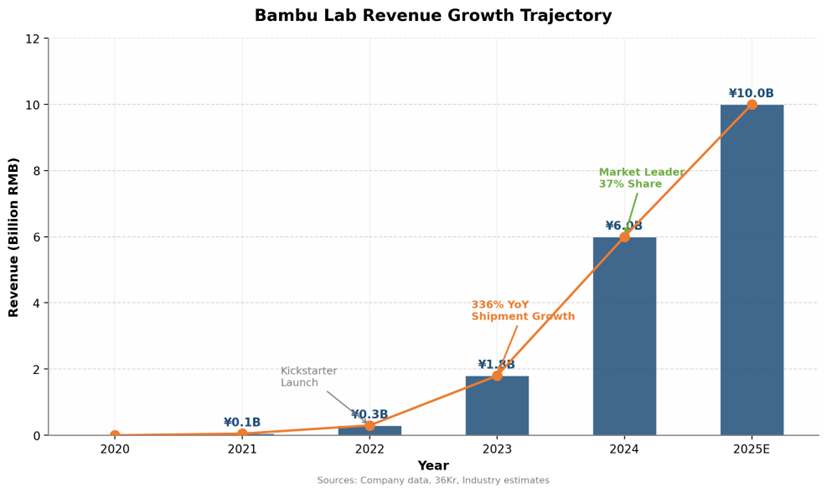
Figure 3: Bambu Lab Revenue Growth Trajectory (2020-2025E)
The company's funding history reflects strong institutional confidence. IDG Capital led three consecutive funding rounds, expressing regret only that Bambu Lab achieved profitability too quickly to require further financing. Other notable investors include 5Y Capital, Temasek Holdings, True Light Capital, and Tencent. Industry sources indicate Bambu Lab's valuation has exceeded RMB 30 billion (approximately USD 4.2 billion).
|
Attribute |
Details |
|
Founded |
November 9, 2020, Shenzhen, China |
|
Founding Team |
Former DJI consumer drone division engineers |
|
CEO |
Dr. Ye Tao (8 years at DJI) |
|
Headquarters |
Qianhai Shenzhen-Hong Kong Cooperation Zone |
|
2024 Revenue |
RMB 6 billion (USD ~850 million) |
|
2025E Revenue |
RMB 10 billion (USD ~1.4 billion) |
|
Net Profit (2024) |
RMB 2+ billion (USD ~280 million) |
|
Global Market Share |
37% (entry-level segment, Q4 2025) |
|
Valuation |
RMB 30+ billion (USD ~4.2 billion) |
|
Employees |
318+ (as of March 2025) |
|
Key Investors |
IDG Capital, Tencent, Temasek, 5Y Capital |
|
Patents |
136 patents, 160 trademarks |
Bambu Lab maintains a strategically tiered product portfolio spanning entry-level to professional segments. The company's product strategy emphasizes vertical integration, with each printer designed to function as a gateway to the broader Bambu ecosystem including software, materials, and the MakerWorld content platform.
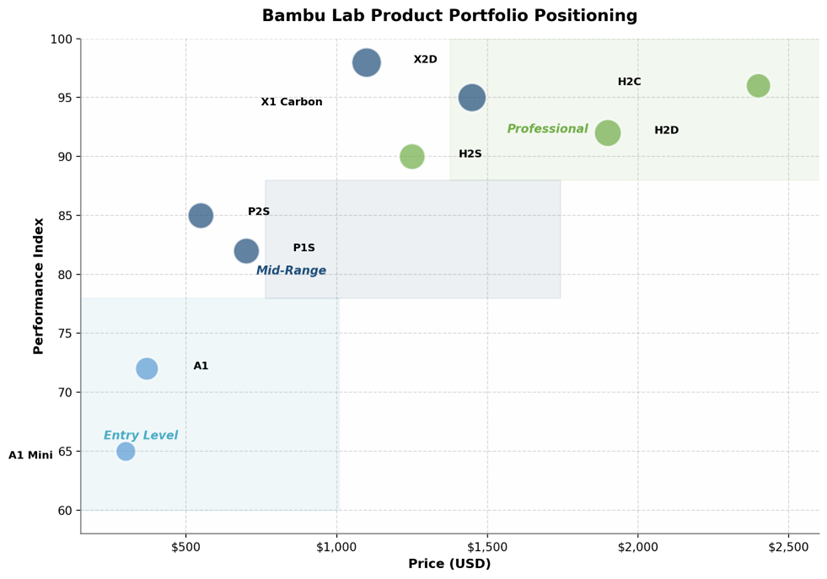
Figure 4: Bambu Lab Product Portfolio Positioning by Price and Performance
The X-Series represents Bambu Lab's flagship product line. The X1 Carbon, launched via Kickstarter in 2022 and selected as one of TIME Magazine's Best Inventions of the Year, established the company's reputation for professional-grade performance at accessible prices. The X1 features CoreXY kinematics with 500 mm/s print speed, 20,000 mm/s acceleration, micro-LiDAR first-layer inspection, and AI-powered failure detection. The X2D, launched in 2026, introduces dual-extrusion capabilities with direct drive and auxiliary extrusion.
The P-Series targets the prosumer segment with the P1S and its successor the P2S, offering enclosed build chambers, CoreXY motion systems, and AMS compatibility at price points between USD 549-699. The P2S features Bambu Lab's Adaptive Airflow System, enabling both PLA cooling mode and high-temperature material printing within the same enclosed chamber.
The A-Series addresses the entry-level market with the A1 (USD 369) and A1 Mini (USD 299), featuring full-auto calibration, active flow rate compensation, and quick-swap nozzles. Despite their positioning as budget options, these printers maintain 500 mm/s top speeds and deliver print quality that competes with machines costing three times as much.
The H-Series represents Bambu Lab's expansion into multi-function fabrication. The H2D combines 3D printing with laser cutting, pen plotting, and material slicing capabilities starting at USD 1,899. The H2S offers a larger build volume (340x320x340 mm) with integrated laser engraving, while the H2C provides a dual-extruder configuration for professional manufacturing environments.
The entry-level 3D printer market has undergone a dramatic restructuring since Bambu Lab's entry. In Q2 2024, Creality held a dominant 47% share of entry-level shipments with 64% year-over-year growth. Bambu Lab captured 26% share but achieved an extraordinary 336% shipment growth rate. By Q4 2025, the positions had inverted: Bambu Lab claimed 37% market share while Creality's share declined to approximately 22%.
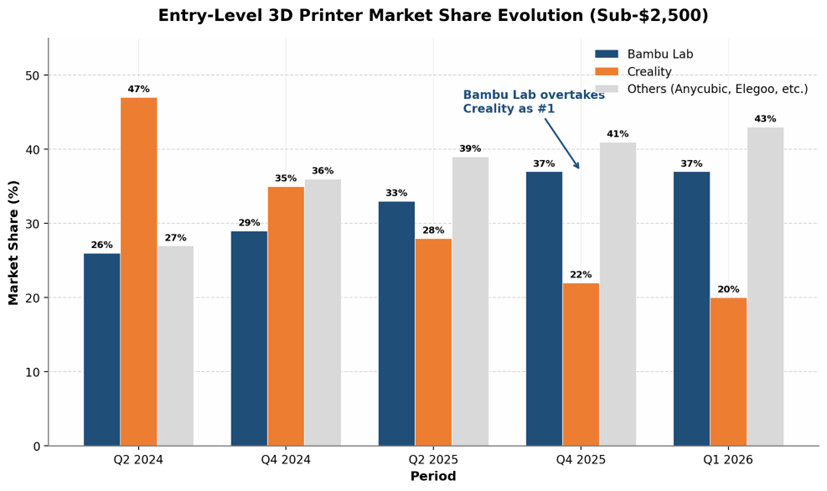
Figure 5: Entry-Level 3D Printer Market Share Evolution (Sub-USD 2,500)
This rapid share transfer reflects a fundamental shift in consumer preferences. Bambu Lab's integrated ecosystem approach, combining hardware, software, and content, has redefined the basis of competition from price and specifications to user experience and ecosystem value. Creality's response, the K2 Plus and K2 Pro, represents a credible feature-for-feature challenge but arrives after Bambu Lab has already established brand loyalty and ecosystem lock-in.
Bambu Lab's competitive advantages are most evident in software integration, AI capabilities, and ecosystem depth. While competitors have matched or exceeded Bambu Lab on individual hardware specifications such as build volume or maximum hotend temperature, no competitor has achieved comparable integration across the full user journey from model discovery to finished print.
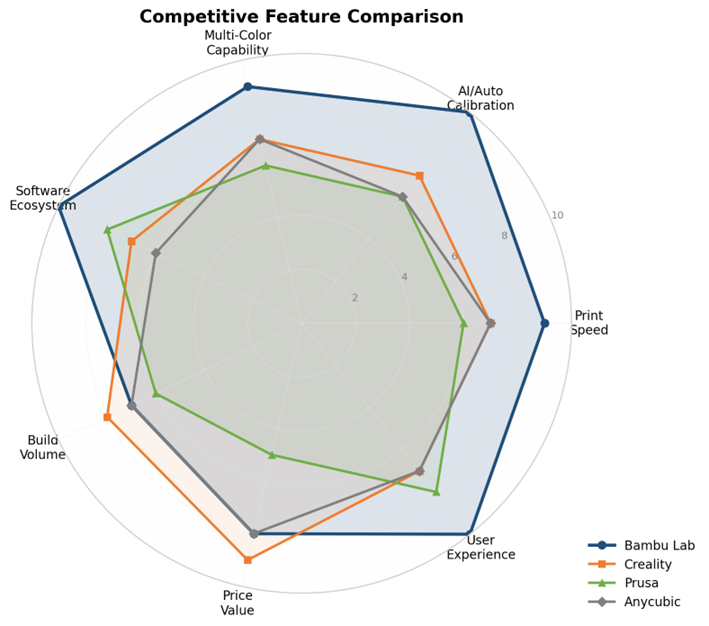
Figure 6: Competitive Feature Comparison Across Key Dimensions
Bambu Lab's most significant strategic differentiator is its vertically integrated ecosystem. While traditional 3D printer manufacturers focus primarily on hardware, Bambu Lab has constructed a comprehensive platform that spans the entire user workflow from design discovery to print completion.
MakerWorld, launched in October 2023, serves as the company's content platform and community hub. By December 2025, the platform had accumulated 50 million registered users with over 10 million monthly active users. The platform hosts nearly 2 million quality 3D models with approximately 100,000 new uploads monthly. Crucially, every model on MakerWorld includes pre-configured print profiles optimized for Bambu Lab printers, effectively eliminating the configuration barrier that historically frustrated new users.
MakerLab, integrated within MakerWorld, provides AI-powered tools for 3D model generation. By the end of 2025, 310,000 users had generated 2.6 million original models using MakerLab's tools, equivalent to over 7,000 new designs daily. The integration of Meshy's Image-to-3D tool in March 2026 enables users to generate print-ready 3D models from photographs within minutes, further democratizing 3D content creation.
Bambu Studio, the company's slicer software based on open-source foundations, provides deep hardware-software integration with automatic print profile configuration. Bambu Handy, the mobile companion app, enables remote printer monitoring and control. This software ecosystem creates switching costs that strengthen customer retention and drive recurring engagement.