JACKERY BRAND RESEARCH REPORT
Jackery(Amazon storefront), founded in 2012 and headquartered in Shenzhen, China, has established itself as the global leader in the portable power station market with a 16.3% market share as of 2024. The brand, operating under parent company Shenzhen Hello Tech Energy Co., Ltd. (Huabao New Energy, SZSE: 301327), has sold over 6 million units worldwide and built a comprehensive product portfolio spanning the Explorer series (100Wh to 5,120Wh), the SolarSaga panel lineup, and the recently launched Essential Home Backup (EHB) systems.
In 2024, Huabao New Energy achieved operating revenue of RMB 3.606 billion (approximately USD 500 million), representing a 55.8% year-over-year increase. North America contributed 59% of total revenue, followed by Asia ex-China at 30.4% and Europe at 5.3%. The company returned to profitability with a net profit of RMB 172 million after a loss in 2023, demonstrating the resilience of its M2C (Manufacturer-to-Consumer) direct-sales model.
However, the company faces significant headwinds in 2025-2026: U.S. tariffs on Chinese lithium-ion batteries have surged to an effective 82% (up from ~11% in 2024), while intense competition from EcoFlow (13.5% market share), Bluetti, and Anker Solix is compressing margins. This report provides a comprehensive analysis of Jackery's strategic position and outlines recommendations for sustained leadership.
Jackery was founded by a former Apple battery engineer in Shenzhen, China's technology manufacturing hub. The company pioneered the portable power station category, launching its first lithium-based portable power station in 2015. The parent company, Huabao New Energy, went public on the Shenzhen Stock Exchange in 2022 (ticker: 301327) and maintains an asset-light, brand-focused business model centered on M2C direct sales.
|
Attribute |
Details |
|
Parent Company |
Shenzhen Hello Tech Energy Co., Ltd. (Huabao
New Energy) |
|
Stock Exchange |
Shenzhen Stock Exchange (SZSE: 301327) |
|
Founded |
2012, Shenzhen, China |
|
Global Sales |
6+ million units sold |
|
Global Market Share |
16.3% (#1 globally, 2024) |
|
Product Categories |
Portable Power Stations, Solar Panels, Home
Backup Systems |
|
Key Markets |
North America (59%), Asia ex-China (30%),
Europe (5%) |
|
Patents |
2,248+ patents globally |
Jackery has cultivated a brand identity as the "trusted pioneer" of outdoor portable power. Consumer sentiment analysis across Reddit communities (r/SolarDIY, r/preppers, r/vandwellers, r/camping) reveals that 58% of discussions cite Jackery as the "default" or "reference" brand for camping and outdoor use. The brand's competitive positioning emphasizes portability, solar integration, and outdoor durability rather than raw specifications.
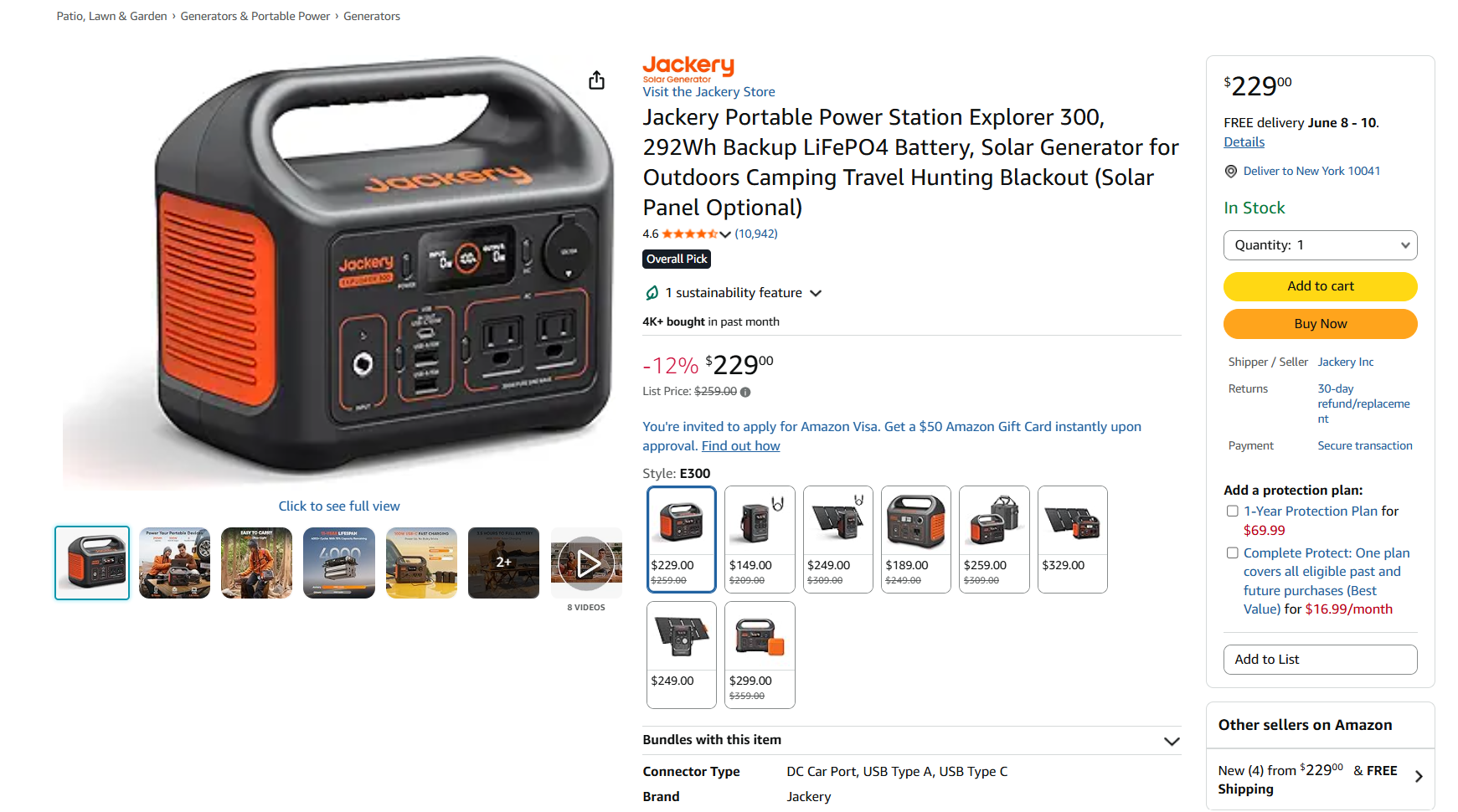
On Amazon, Jackery products average 4.7 out of 5 stars across approximately 15,000 reviews in the United States. In the UK market, Jackery has accumulated over 16,845 reviews with an average rating of 4.7, compared to EcoFlow's 6,632 reviews at 4.7. The sheer volume of reviews (roughly 3x that of its closest competitor) signals broad market penetration and consumer trust.
The global portable power station market was valued at approximately USD 4.9 billion in 2024 and is projected to reach USD 18-20 billion by 2033, representing a compound annual growth rate (CAGR) of approximately 15.5%. This robust growth is driven by four converging trends: rising frequency of extreme weather-induced power outages (up 22% between 2019-2025), increasing adoption of outdoor recreation and van life, the shift toward remote work, and growing consumer awareness of energy independence.
North America dominates the market with approximately 40-48% of global demand, driven by the United States' large camping population (over 50 million active campers), frequent grid disruptions in states like Texas and California, and high consumer purchasing power. The Asia-Pacific region, led by Japan and Australia, represents the second-largest market, while Europe is the fastest-growing region with emerging demand in Germany, the UK, and France.
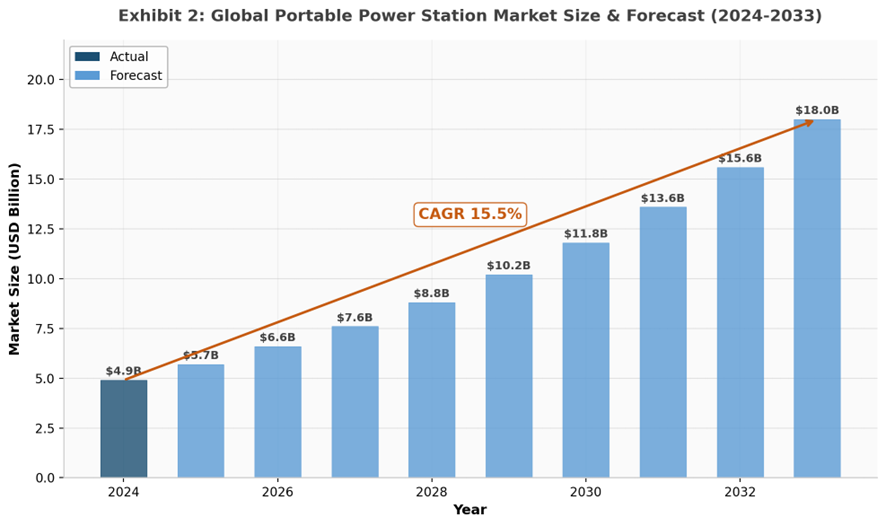
Exhibit 1: Global Portable Power Station Market Size & Forecast (2024-2033)
Jackery's revenue distribution reflects the geographic concentration of demand. In 2024, North America generated RMB 2.126 billion (59% of total revenue), up 42.9% year-over-year. The U.S. market alone accounts for the majority of this, supported by Jackery's strong Amazon presence, independent website (jackery.com), and retail partnerships with Home Depot, Costco, Target, Best Buy, and Walmart.
Asia (excluding China) contributed RMB 1.097 billion (30.4%), with Japan representing the largest sub-market. Japanese consumers primarily purchase portable power stations for emergency preparedness following frequent typhoons and earthquakes; 67% of households in disaster-prone areas own at least one unit. The offline retail channel dominates in Japan, with Yodobashi Camera and Bic Camera as key partners.
Europe contributed only 5.3% of revenue in 2024 but demonstrated the highest growth trajectory at 106.4% year-over-year. Jackery established a dedicated European subsidiary in 2024 to localize marketing and comply with CE certification requirements. Germany and the UK are the primary growth markets, driven by camping culture and increasing grid instability concerns.
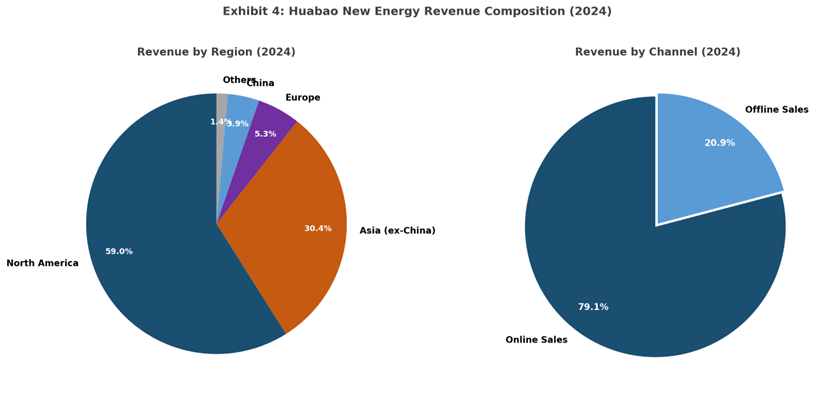
Exhibit 2: Huabao New Energy Revenue Composition by Region and Channel (2024)
The portable power station market is moderately consolidated, with the top five brands accounting for approximately 60% of global market share. Jackery leads with 16.3%, followed by EcoFlow at 13.5%, Goal Zero at 11.2%, Anker Solix at 9.8%, and Lion Energy at 8.5%. However, the "Others" category at 33.5% indicates significant fragmentation and the presence of numerous white-label Chinese brands competing aggressively on price.
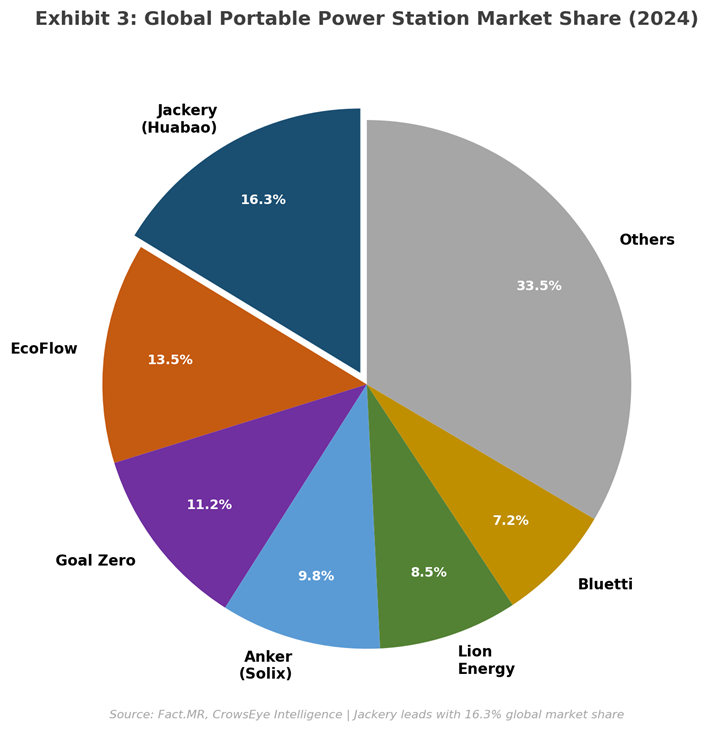
Exhibit 3: Global Portable Power Station Market Share (2024)
Each major competitor has carved out a distinct positioning. EcoFlow positions itself as the "technology leader" with the industry's fastest charging speeds (0-80% in ~50 minutes for the Delta series) and modular expandability. Bluetti competes as the "all-rounder" with large-capacity, versatile systems at 10-20% lower price points than Jackery. Anker (Solix) leverages its broader consumer electronics brand recognition to offer entry-level products at competitive prices. Goal Zero, the oldest player (founded 2009), targets the premium outdoor segment with rugged, expedition-grade equipment.
The following heat map summarizes the competitive positioning across eight key dimensions. Jackery leads in portability, brand recognition, and solar integration, while EcoFlow dominates in charging speed, innovation, and smart home integration. Bluetti offers the best warranty terms (5 years vs. Jackery's 3 years) and the lowest price per watt-hour.
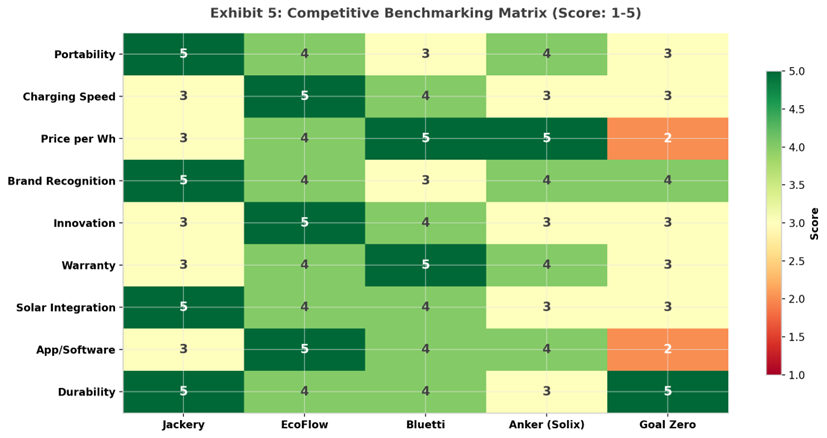
Exhibit 4: Competitive Benchmarking Matrix (Score: 1-5)
|
Brand |
Positioning |
Key
Strength |
Key
Weakness |
Price
Tier |
|
Jackery |
Outdoor Pioneer |
Portability, Brand Trust |
Slower Charging |
Premium |
|
EcoFlow |
Tech Leader |
Fast Charging, Innovation |
Higher Price |
Premium |
|
Bluetti |
Value All-Rounder |
Capacity, Warranty |
Brand Awareness |
Mid-Range |
|
Anker |
Consumer Electronics |
Price, Distribution |
Outdoor Credibility |
Value |
|
Goal Zero |
Premium Outdoor |
Durability, Legacy |
Price, Technology |
Premium+ |
Huabao New Energy's financial performance reflects the volatile nature of a growth-stage consumer electronics company navigating macroeconomic headwinds. Revenue grew from RMB 1.02 billion in 2020 to RMB 3.606 billion in 2024, a CAGR of 37%. The company returned to profitability in 2024 with a net profit of RMB 172 million after a loss of RMB 174 million in 2023, driven by cost optimization and sales recovery in North America.
Gross margin improved from 39.5% in 2023 to 44.1% in 2024, reflecting the benefits of the M2C direct-sales model and favorable lithium battery costs (which declined to $108/kWh globally in 2025, per BloombergNEF). However, the 2025 preliminary results indicate margin pressure from increased promotional spending and tariff-related cost increases, with gross margin declining to 37.6% and net profit falling 92.8% year-over-year to RMB 17 million.
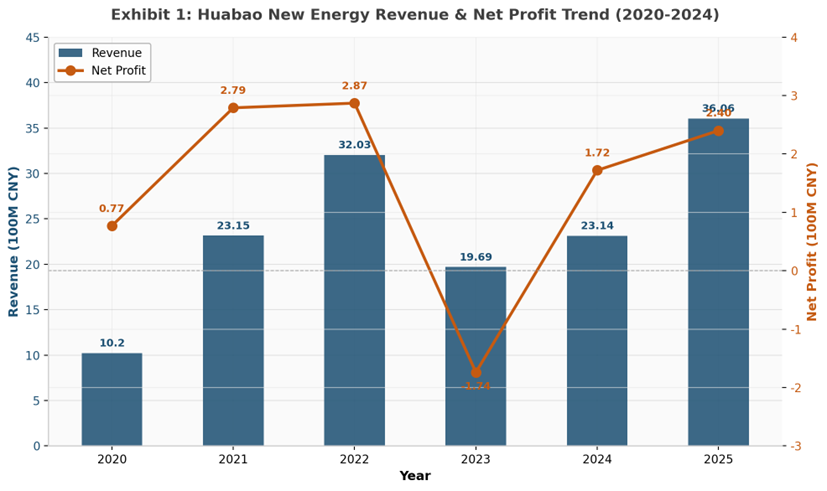
Exhibit 5: Huabao New Energy Revenue & Net Profit Trend (2020-2024)
Energy storage products (portable power stations and home backup systems) contributed 89.3% of revenue in 2024, with the remainder coming from photovoltaic solar panels (10.7%). By channel, online sales (Jackery.com, Amazon, other e-commerce platforms) accounted for 79.1% of revenue, while offline retail contributed 20.9%. The online channel's dominance reflects the company's M2C strategy, which captures higher margins and direct customer relationships compared to wholesale distribution.
The most significant external risk facing Jackery is the escalation of U.S. tariffs on Chinese lithium-ion batteries. Effective January 2026, the combined tariff rate reached approximately 82%, comprising a 3.4% base MFN duty, a 54% reciprocal tariff, and a 25% Section 301 surcharge. This represents a sevenfold increase from the approximately 11% effective rate in 2024. For a battery pack with a $100 factory price, the tariff alone now amounts to approximately $82, compared to roughly $11 previously.
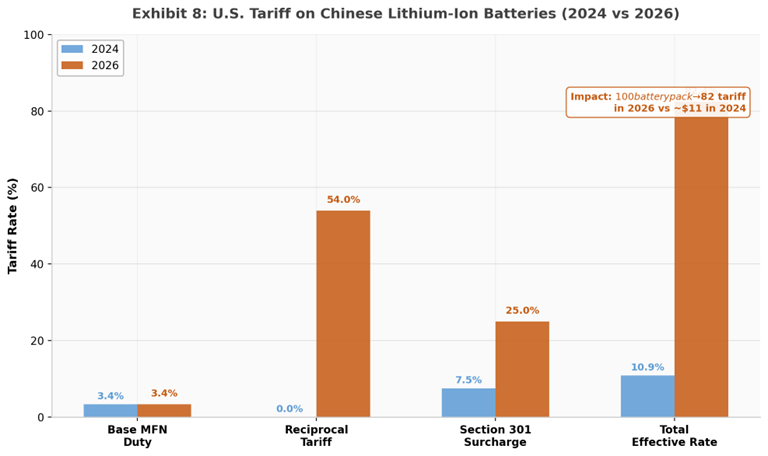
Exhibit 6: U.S. Tariff on Chinese Lithium-Ion Batteries (2024 vs 2026)
Jackery's product ecosystem spans four tiers. The Entry tier (100-300Wh, $150-350) includes the Explorer 100 Plus and 300 Plus, targeting casual campers and emergency phone charging. The Core tier (500-1500Wh, $400-1,200) represents the volume drivers, including the Explorer 1000 v2 with LFP battery technology and 4,000 charge cycles. The Pro tier (2000-5000Wh, $1,500-3,500) serves home backup and extended off-grid use, while the Home Backup tier (5-60kWh expandable) represents the strategic growth vector.
At CES 2026, Jackery unveiled three significant new products signaling a strategic pivot beyond portable power: the Explorer 1500 Ultra (IP65-rated rugged power station for extreme environments), the Solar Gazebo (a 2,000W solar canopy generating up to 10kWh per day), and the Solar Mars Bot (an autonomous solar-powered robot with AI-enhanced computer vision). These innovations demonstrate Jackery's ambition to expand from portable power devices to an integrated home energy ecosystem.
Jackery's proprietary ChargeShield technology integrates 62-layer battery protection mechanisms, 12 protection algorithms, and 4 physical safety barriers. This system extends battery cycle life by up to 50% compared to standard BMS implementations. The company's solar panel technology achieves 25% conversion efficiency with IBC (Interdigitated Back Contact) cells, delivering approximately 50% more power than conventional panels in low-light conditions.
The parent company holds over 2,248 patents globally and has received more than 100 international design and innovation awards, including CES Innovation Awards, Red Dot Design Awards, and IF Design Awards. R&D investment reached RMB 177.8 million in 2025, representing 4.3% of revenue, with the R&D team expanding to 330 personnel (up 29.4% year-over-year).
Jackery employs a digital-first, influencer-heavy marketing strategy that aligns with its target demographic of outdoor enthusiasts and tech-savvy millennials. Influencer marketing accounts for a significant portion of the marketing budget, with YouTube contributing 38.5% of influencer-generated content, Instagram 31.7%, and TikTok 29.9%. The United States represents 50.4% of influencer content geography, reflecting the brand's prioritization of its largest market.
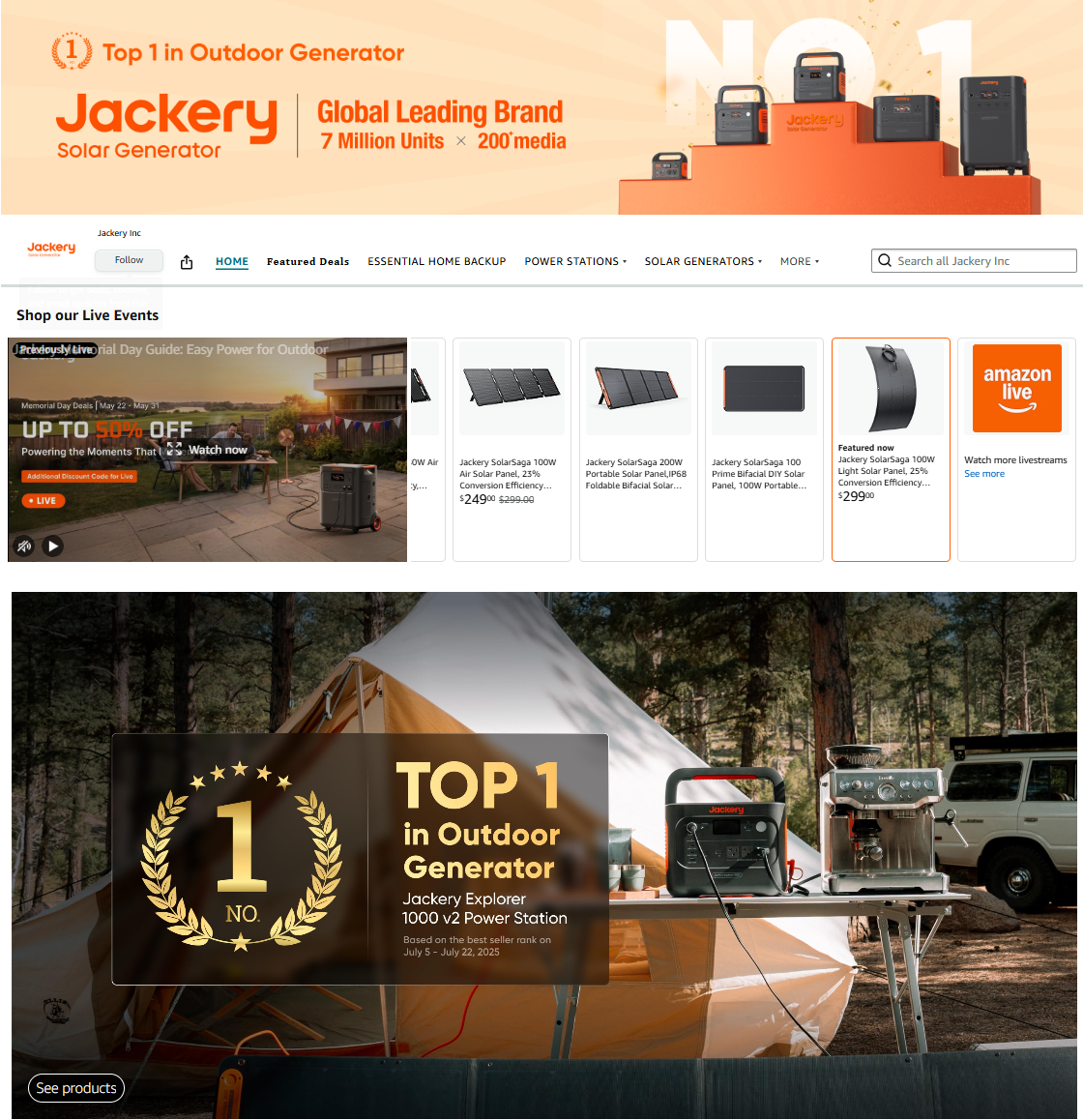
The company's M2C (Manufacturer-to-Consumer) direct sales model eliminates traditional wholesale intermediaries, enabling higher margins and direct customer data collection. Jackery operates 60+ localized independent websites across global markets and maintains flagship stores on Amazon, where it is consistently ranked as the #1 seller in the "Outdoor Generator" category. The brand's customer service model emphasizes 24/7 chat and email support with a claimed 95% resolution rate within 24 hours.
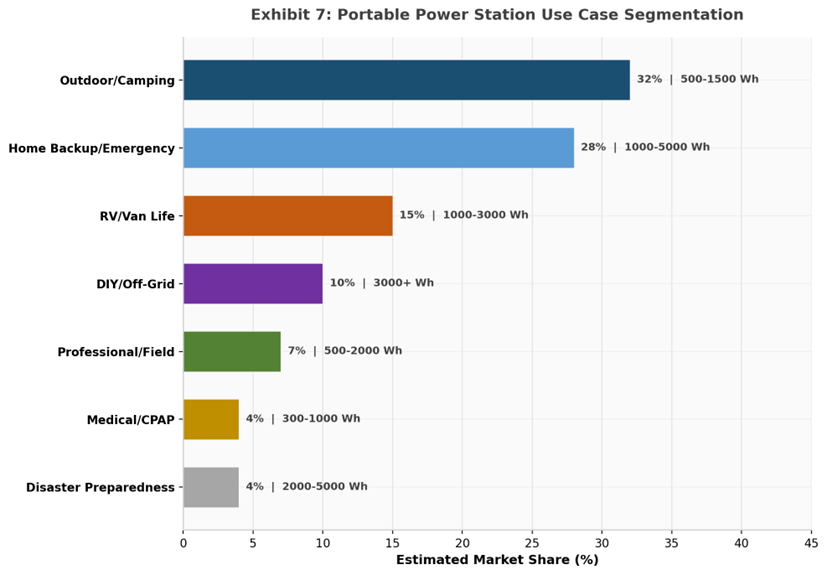
Exhibit 7: Portable Power Station Use Case Segmentation
Jackery faces a multi-dimensional risk landscape that requires proactive strategic mitigation. The following table summarizes the eight most critical risk factors, their likelihood, potential impact, and recommended mitigation strategies.
|
Risk
Factor |
Likelihood |
Impact |
Mitigation
Strategy |
|
U.S. Tariff Escalation |
High |
Critical |
Diversify manufacturing to Vietnam/Mexico |
|
EcoFlow Innovation Lead |
High |
High |
Accelerate R&D; leverage CES 2026
products |
|
White-Label Price War |
Medium |
Medium |
Defend brand premium through innovation |
|
Battery Technology Shift |
Medium |
Medium |
Invest in sodium-ion and solid-state R&D |
|
Safety Incident / Recall |
Low |
Critical |
Strengthen QA; maintain UL certifications |
|
Market Saturation (Outdoor) |
Medium |
Medium |
Pivot to Home Backup segment |
|
Supply Chain Disruption |
Medium |
High |
Dual-source critical components |
|
FAA Battery Restrictions |
Low |
Low |
Focus on non-air travel use cases |
A favorable long-term trend for the industry is the sustained decline in lithium-ion battery costs. According to BloombergNEF, average battery pack prices fell to $108/kWh in 2025 (down 8% year-over-year), while stationary storage packs dropped to $70/kWh (down 45%). China's domestic pack prices are even lower at approximately $84/kWh. This cost deflation partially offsets the tariff burden and enables manufacturers to maintain competitive pricing while preserving margins.
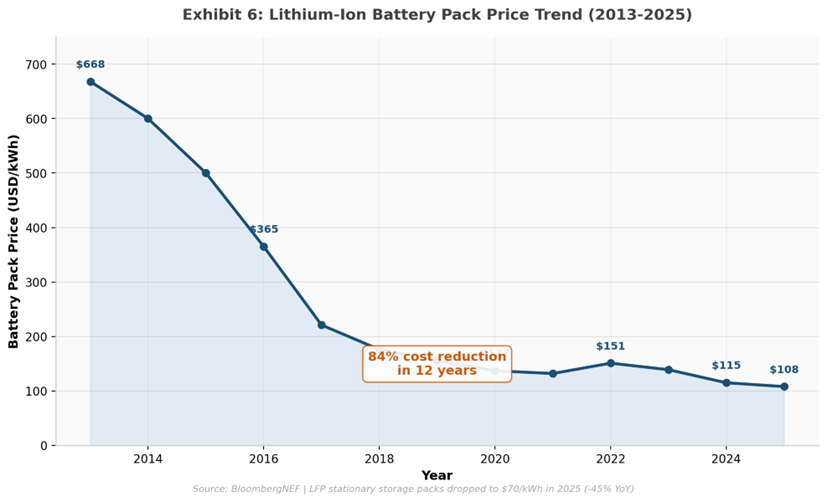
Exhibit 8: Lithium-Ion Battery Pack Price Trend (2013-2025)