Roborock Brand Analysis
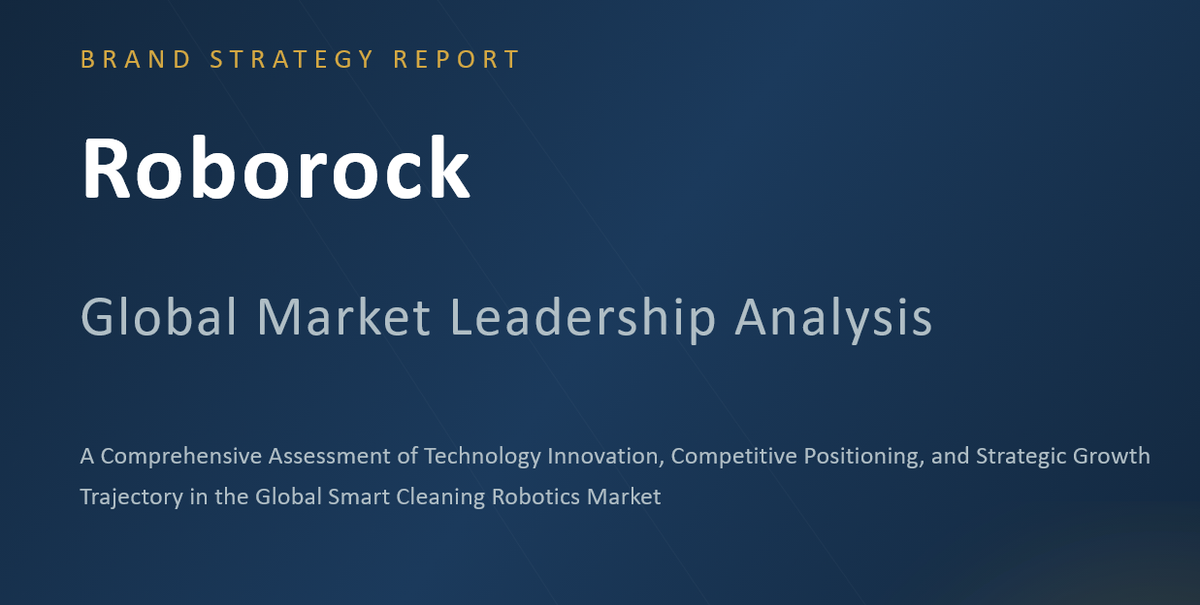
Roborock(Amazon storefront) has emerged as the undisputed global leader in smart cleaning robotics, achieving a historic milestone in 2025 with RMB 18.69 billion ($2.74 billion) in revenue, representing 56.5% year-over-year growth. According to IDC's Worldwide Quarterly Smart Vacuum Robotics Tracker, the company captured 17.7% of the total global cleaning robot market by shipments (5.8 million units) and an industry-leading 24.1% market share in the Robot Vacuum Cleaner (RVC) segment during the second half of 2025.
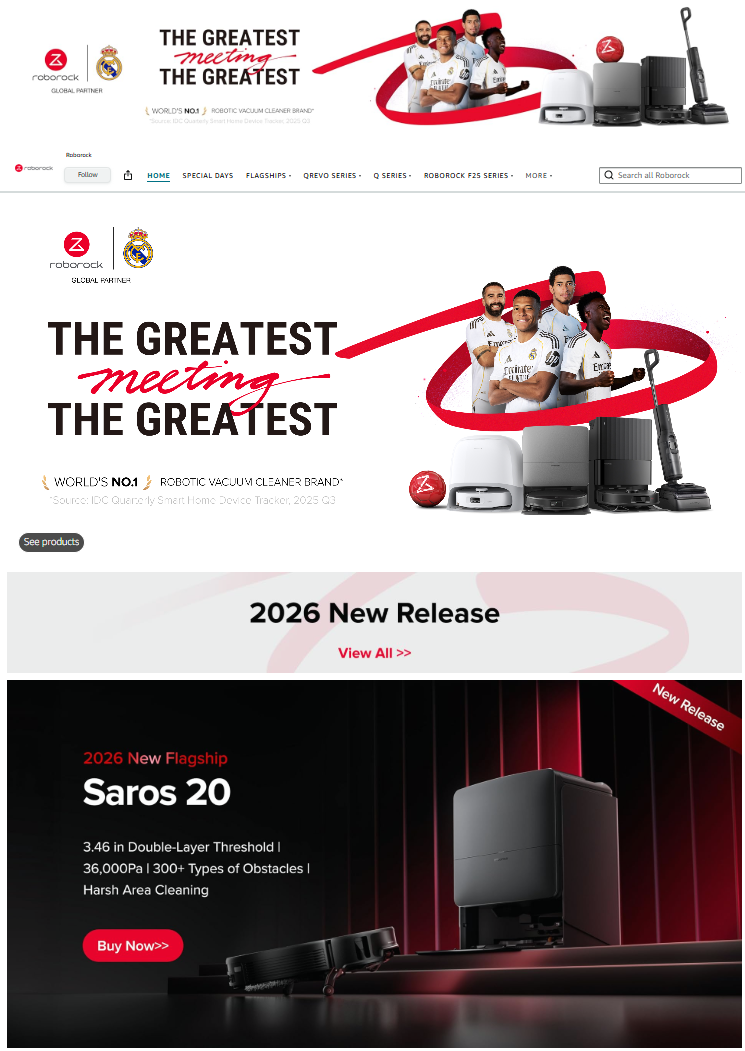
The company's ascent reflects a deliberate strategy built on three interconnected pillars: sustained technology leadership through industry-first innovations, aggressive global market expansion, and a comprehensive product portfolio spanning entry-level to flagship segments. Roborock's R&D investment reached RMB 1.42 billion in 2025, up 46% year-over-year, representing 7.6% of revenue and underscoring its technology-first positioning.
Overseas markets have become the primary growth engine, with international revenue surging 63.5% to RMB 10.44 billion and now accounting for 56% of total revenue. The company achieved number-one market positions in key national markets including the United States, Germany, and South Korea, demonstrating its ability to compete effectively across diverse consumer preferences, home types, and cleaning habits.
Founded in 2014 in Beijing, China, Beijing Roborock Technology Co., Ltd. (SSE: 688169) has evolved from a startup into the world's largest smart cleaning robot manufacturer in just over a decade. The company went public on the Shanghai Stock Exchange STAR Market in 2020 and currently employs approximately 3,452 people globally.
Roborock's mission centers on transforming intelligent cleaning robots into home helpers, assistants, and companions through continuous technological innovation. The company maintains a public market capitalization of approximately $4.49 billion as of May 2026, with shares trading at $17.34. Its products have entered more than 170 countries and regions, serving over 20 million households worldwide.
|
Attribute |
Details |
|
Company Name |
Beijing Roborock Technology Co., Ltd. |
|
Stock Code |
SSE: 688169 |
|
Founded |
2014, Beijing China |
|
Employees |
3,452 |
|
Market Cap |
~$4.49 billion (May 2026) |
|
Headquarters |
Beijing, China |
|
Global Presence |
170+ countries, 20M+ households |
|
Core Products |
Robot vacuums, Floor scrubbers, Washer-dryers |
|
2025 Revenue |
RMB 18.69B ($2.74B), +56.5% YoY |
The global robotic vacuum cleaner market is experiencing robust expansion, driven by the convergence of smart home adoption, AI-powered navigation breakthroughs, and evolving consumer lifestyles prioritizing convenience and automation. Multiple market research firms project strong growth trajectories through the next decade, though estimates vary based on scope and methodology.
According to Maximize Market Research, the market was valued at USD 7.78 billion in 2025 and is expected to reach USD 32.04 billion by 2032, representing a CAGR of 22.4%. Congruence Market Insights projects a rise from USD 7.83 billion in 2025 to USD 19.67 billion by 2033 at a 12.2% CAGR. Future Market Insights estimates the market at USD 12.5 billion in 2026, growing to USD 39.9 billion by 2036 at a 12.3% CAGR.
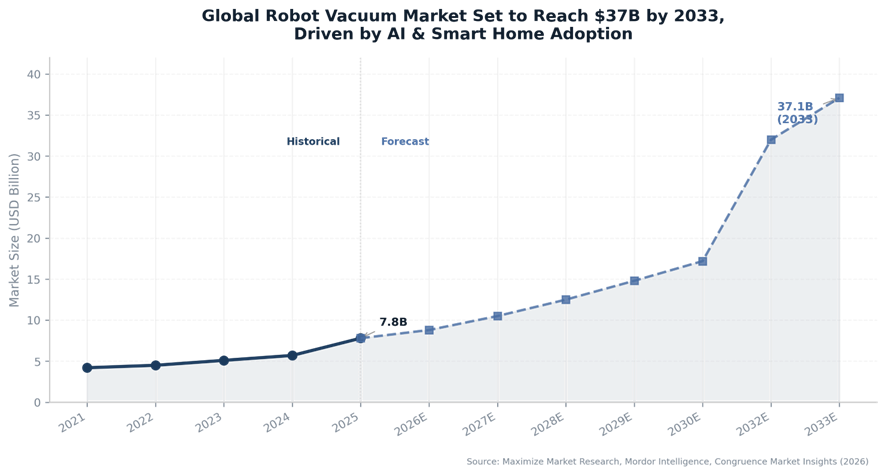
Figure 1: Global Robot Vacuum Market Size and Projected Growth (USD Billion)
Key growth drivers include rising smart home penetration (over 48% adoption in developed markets), AI navigation efficiency improvements (up to 40% cleaning time reduction), increasing urbanization, and growing demand from aging populations and dual-income households seeking time-saving automation. The Asia-Pacific region leads with approximately 47% market share, followed by North America at 26% and Europe at 20%.
The robot vacuum market is moderately consolidated, with the top five firms accounting for approximately 65% of sales. Competition intensified significantly in 2024-2025, with Chinese manufacturers leveraging rapid product iteration, aggressive pricing, and advanced AI features to challenge incumbent Western brands.
|
Company |
Headquarters |
Est.
Share |
Key
Strengths |
|
Roborock |
China |
24.1% |
LiDAR nav, AI, mechanical arm, global brand |
|
Ecovacs |
China |
16.3% |
Hybrid vacuum-mop, APAC dominance, air-dry
docks |
|
iRobot |
USA |
15.2% |
Brand equity, Roomba ecosystem, retail
distribution |
|
SharkNinja |
USA |
12.8% |
Value pricing, NA retail, mid-tier focus |
|
Dreame |
China |
11.5% |
High-end disruptor, MopExtend, rapid feature
rollout |
|
Others |
Various |
20.1% |
Xiaomi ecosystem, Dyson premium, regional
brands |
Roborock's competitive positioning is best understood through a multi-dimensional assessment across technology leadership, market share, revenue growth, R&D intensity, brand recognition, and product portfolio breadth. The company outperforms rivals across virtually every dimension, with particularly strong advantages in technology innovation and revenue growth.
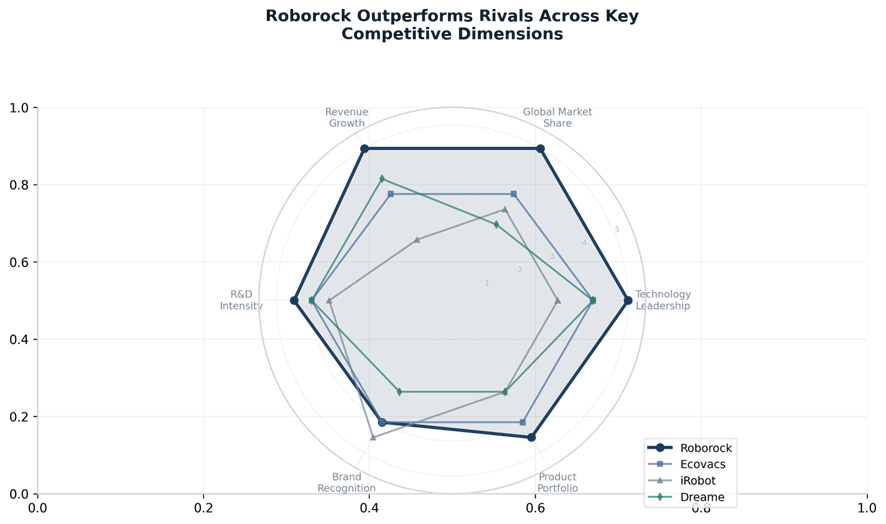
Figure 2: Competitive Positioning Assessment Across Key Dimensions (Scale 1-5)
Roborock's market dominance is most pronounced in the premium segment, where its combination of advanced LiDAR navigation, AI obstacle avoidance, and multifunction docking stations commands higher average selling prices. The company's strategy of technology diffusion, extending flagship features across mid-range and entry-level price tiers, has proven particularly effective in capturing market share across all consumer segments.
Roborock delivered record-breaking financial results in 2025, with full-year revenue of RMB 18.695 billion representing 56.51% year-over-year growth, the highest in the company's history. The fourth quarter alone generated RMB 6.628 billion in revenue, up 34.23% year-over-year, demonstrating sustained momentum even at a larger revenue base.
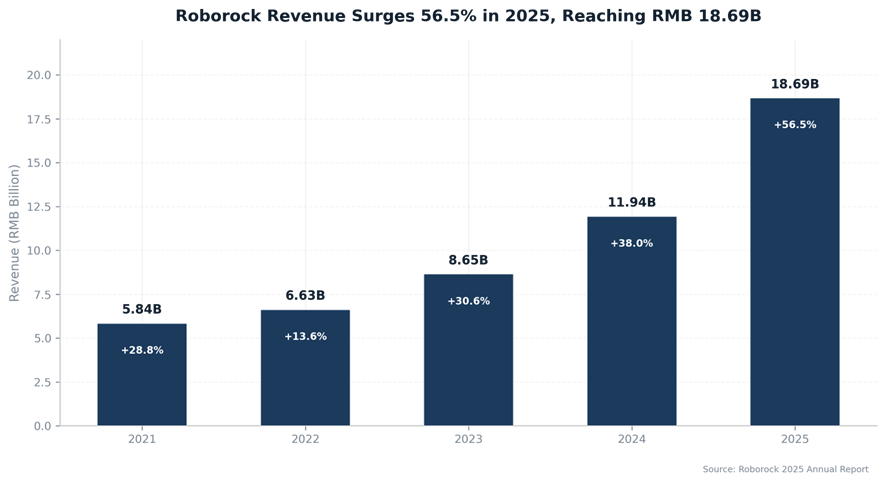
Figure 3: Roborock Annual Revenue and Year-over-Year Growth Rate (2021-2025)
The revenue composition reveals important strategic dynamics. Smart robot vacuums and accessories contributed RMB 15.17 billion, growing 39.9% year-over-year, while other smart home appliance products (primarily wet-dry vacuums) generated RMB 3.51 billion, surging 227.8% year-over-year, raising their revenue contribution to 18.8%. Floor-washing machines have emerged as a significant second growth driver.
Net profit attributable to shareholders in 2025 was RMB 1.363 billion, down 31.0% year-over-year, reflecting deliberate strategic investments in market share acquisition. Gross profit margin compressed from 50.4% to 42.4% due to competitive pricing, government subsidy programs, and channel expansion investments. However, Q1 2026 results showed early signs of profitability recovery, with net profit rising 20.83% year-over-year to RMB 323 million.
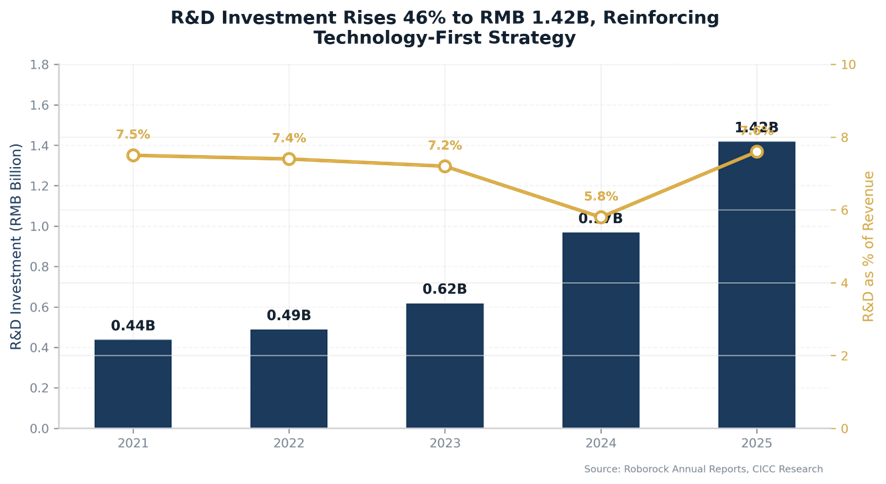
Figure 4: R&D Investment Trend and R&D Intensity (2021-2025)
Roborock's globalization strategy has achieved remarkable success, with overseas markets becoming the primary growth engine. In 2025, overseas revenue reached RMB 10.442 billion, growing 63.46% year-over-year and accounting for approximately 56% of total revenue, a significant shift from the company's earlier China-centric revenue profile.
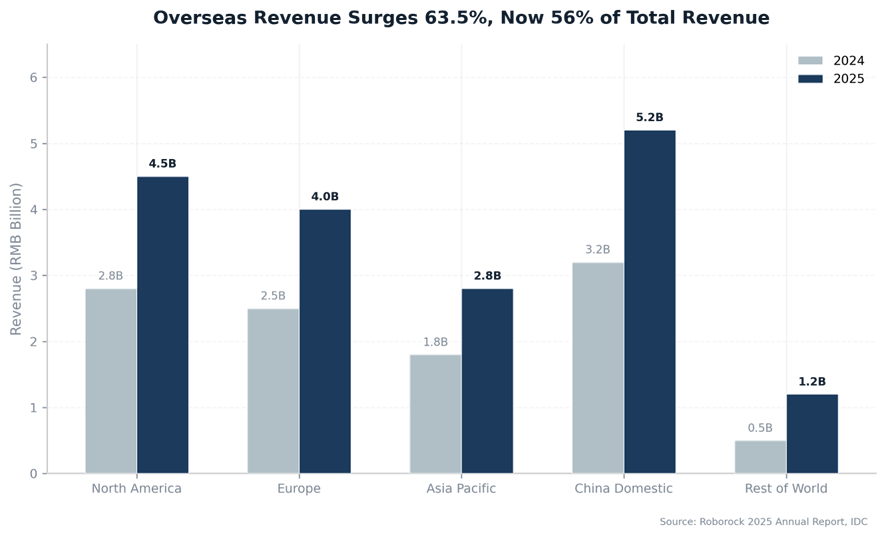
Figure 5: Regional Revenue Distribution Comparing 2024 and 2025 (RMB Billion)
The United States represents Roborock's largest single-country market in the Americas, where the company achieved 27.5% Amazon market share in Q1 2026, up 4.4 percentage points year-over-year. North American revenue growth accelerated to approximately 30% in Q1 2026, driven by breakthroughs in offline channel expansion. In Europe, Germany remains the anchor market with over 51% Amazon market share, while Southern and Eastern European markets show strong growth potential. Asia-Pacific markets outside China, led by South Korea, Singapore, and Turkey, contribute steady growth.
Roborock's competitive advantage is fundamentally rooted in sustained technology leadership. The company's R&D spending reached RMB 1.42 billion in 2025, up 46.13% year-over-year, representing 7.59% of total revenue, among the highest ratios in the consumer appliance industry. This investment has yielded a stream of industry-first innovations that set the technical standard for the entire sector.
The company's technology evolution follows a clear trajectory: from early PreciSense LiDAR Navigation System introduced in 2016 (the industry's first mass-produced LDS laser navigation) to the StarSight Autonomous System unveiled in 2024 (the first dual-transmitter solid-state LiDAR with 3D ToF technology), to the groundbreaking OmniGrip Mechanical Arm launched in January 2025.
|
Technology |
Year |
Description |
|
PreciSense LiDAR |
2016 |
First mass-produced LDS laser navigation in
the industry |
|
Reactive AI |
2022 |
Industry-first twin-camera obstacle avoidance
system |
|
StarSight System |
2024 |
First dual-transmitter solid-state LiDAR with
3D ToF |
|
OmniGrip Arm |
2025 |
First five-axis foldable mechanical arm in
robot vacuums |
|
Saros Rover |
2026 |
First two-wheel-leg architecture for robotic
cleaning |
|
VertiBeam 2.0 |
2026 |
Lateral obstacle avoidance for cables and
furniture |
The OmniGrip five-axis mechanical arm, debuted on the flagship Saros Z70, represents a paradigm shift in robotic cleaning capabilities. This foldable robotic arm can identify, grip, and relocate household objects weighing up to 300g, with AI-driven recognition of 108 pre-programmed objects and customizable learning for up to 50 additional items. The Saros Rover, introduced at CES 2026, features the world's first two-wheel-leg architecture in a robot vacuum, earning multiple media accolades for its advancement in human-mobility-inspired robotic cleaning.
Looking ahead, the industry is entering a new phase defined by AI capabilities including multi-sensor data fusion, autonomous decision-making, environmental awareness, and natural language interaction. Roborock's established R&D infrastructure and patent portfolio position the company to maintain leadership as competition shifts from hardware specifications to AI-powered intelligence and autonomous operation.
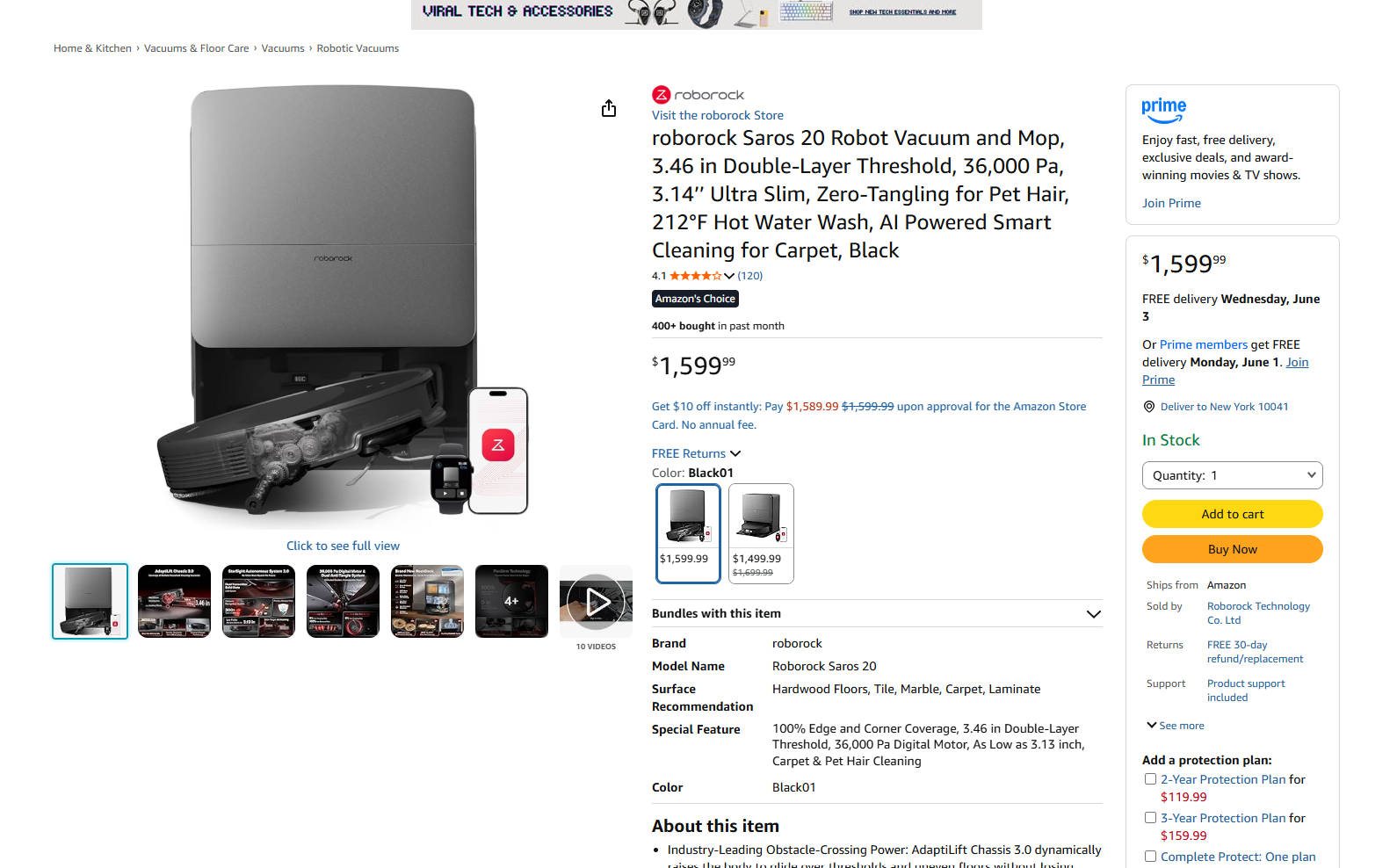
Roborock employs a technology diffusion strategy that systematically extends innovations from flagship products across the full price spectrum. This approach enables the company to serve multiple consumer segments while maintaining technological differentiation at every price point. The portfolio spans four key categories: robot vacuums, wet-dry vacuums, washer-dryers, and robotic lawn mowers.
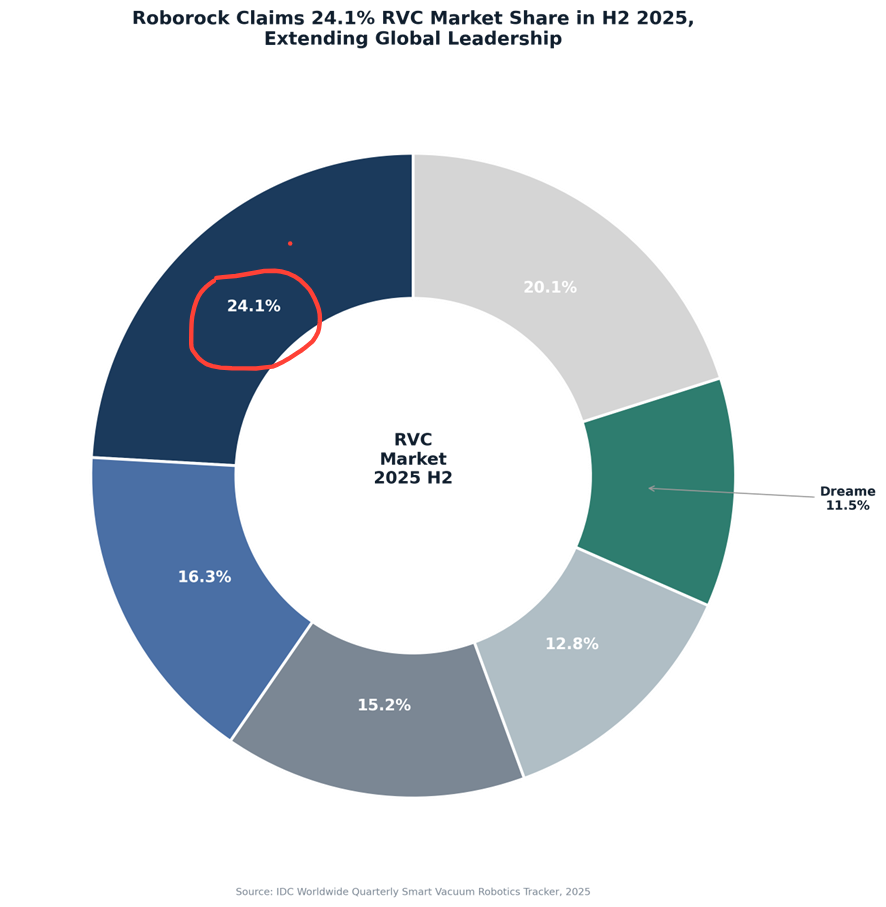
Figure 6: Global Robot Vacuum Cleaner Market Share by Brand, H2 2025 (%)
In the robot vacuum segment, Roborock has built a comprehensive lineup from entry-level to flagship. The Saros Z70 represents the pinnacle of current technology with its five-axis mechanical arm, while the S10 MaxV series has received strong market response since its early 2026 launch. The technology diffusion strategy ensures that features like advanced LiDAR navigation, AI obstacle avoidance, and self-cleaning docks migrate to lower price tiers over time, expanding the addressable market.
The wet-dry vacuum (floor scrubber) business has emerged as the company's second growth engine. According to AVC data, Roborock's floor scrubbers won national championships in both the steam floor scrubber and A30 series segments in 2025. In Q1 2026, the company's domestic floor scrubber online market share reached 22.3%, up 8.5 percentage points year-over-year, consolidating its position as the clear number-two player in this rapidly growing category.
|
Category |
2025 Rev |
YoY
Growth |
Key
Products & Notes |
|
Robot Vacuums |
RMB 15.2B |
+39.9% |
Saros Z70, S10 MaxV, Saros 20; Full price
range coverage |
|
Floor Scrubbers |
~RMB 2.8B |
+~200% |
A30 Pro Steam 2.0; #2 domestic market share |
|
Washer-Dryers |
~RMB 0.5B |
N/A |
Z1 Ultra washer-dryer; Medical-grade mini
washer M1S |
|
Lawn Mowers |
Early stage |
N/A |
Launched Q4 2025; Full-stack self-developed
platform |
|
Accessories |
~RMB 0.2B |
+~50% |
Docks, filters, brushes; Recurring revenue
stream |