EcoFlow Strategic Brand & Market Analysis
EcoFlow(Amazon storefront) has established itself as the technology leader in the portable power station market, leveraging its proprietary X-Stream fast-charging technology to achieve 0-80% charge in under one hour—a decisive competitive advantage over rivals requiring 1.5-2.5 hours. Founded in 2017 by former DJI battery engineers led by CEO Wang Lei, the company has scaled from Kickstarter origins to a projected $1.2 billion in revenue for 2025, representing a three-year CAGR exceeding 50%.
The global portable power station market, valued at $808 million in 2025, is projected to reach $1.9 billion by 2035 at a 9.1% CAGR. However, the far larger opportunity lies in residential energy storage—a $18.5 billion market in 2025 expanding to $68 billion by 2035 at 13.9% CAGR. EcoFlow's strategic pivot toward whole-home energy solutions through its DELTA Pro ecosystem positions the company to capture share in this higher-growth segment.
|
Metric |
Key Finding |
|
2025E
Revenue |
$1.2
billion (3-year CAGR >50%) |
|
Valuation |
Unicorn
status at $1B (2021 Series B) |
|
Market
Position |
Technology
leader in portable power |
|
Core
Advantage |
X-Stream:
0-80% charge in <1 hour |
|
Patent
Portfolio |
1,000+
global patents |
|
IPO
Plans |
U.S.
listing targeting $300M+ raise |
The company is reportedly exploring a U.S. IPO that could raise $300 million, with proceeds earmarked for overseas manufacturing to qualify for U.S. Inflation Reduction Act tax credits and to reduce geopolitical supply chain exposure. At an estimated valuation of $1 billion from its 2022 Series C, a U.S. listing could command significantly higher multiples comparable to Enphase Energy's 20x forward earnings. Investor considerations center on execution risks including intensifying competition from BLUETTI and Anker, battery supply chain volatility, and regulatory scrutiny of Chinese issuers.
EcoFlow was founded in 2017 in Shenzhen, China, by a team of drone-industry veterans led by Wang Lei (Bruce Wang), formerly Director of R&D at DJI, the world's leading drone manufacturer. Wang holds a BEng with First Class Honors in Mechanical Engineering from Hong Kong Polytechnic University (2010) and a PhD in new energy storage technologies from the University of Hong Kong (2014). His technical pedigree—evidenced by 111 authorized patents and 8 research papers in batteries and energy storage—has been central to EcoFlow's innovation-driven culture.
The founding team also includes co-founders Hannah Sieber (President), Fan Zheng, and Eli Harris, who collectively bring expertise in product development, international business development, and hardware engineering. This team's DJI heritage provided immediate credibility in battery management systems (BMS) and power electronics—capabilities that differentiate EcoFlow from competitors with less specialized engineering foundations.
EcoFlow's funding trajectory reflects investor confidence in its technology leadership and market expansion. The company raised $1.1 million via Kickstarter in 2017 for its first RIVER portable power station, validating product-market fit while preserving founder equity. A Series A round in 2019, led by Sky9 Capital, provided growth capital for manufacturing scale-up. The pivotal Series B in 2021 raised over $100 million led by Sequoia Capital China and GL Ventures, establishing unicorn status at a $1 billion valuation. Series C in 2022 added $200 million, bringing total funding to approximately $300 million.
|
Year |
Round |
Amount |
Lead Investors |
|
2017 |
Kickstarter |
$1.1M |
Crowdfunding |
|
2019 |
Series
A |
Undisclosed |
Sky9
Capital |
|
2021 |
Series
B |
$100M+ |
Sequoia
China, GL Ventures |
|
2022 |
Series
C |
$200M |
Multiple
investors |
The global portable power station market represents EcoFlow's core addressable market. Valued at approximately $808 million in 2025, the market is projected to reach $1.9 billion by 2035, growing at a 9.1% CAGR. Growth drivers include increasing frequency of extreme weather events and power outages driving emergency preparedness adoption, rising participation in outdoor recreation (camping, RVing, van life), remote work normalization requiring mobile power solutions, technological advances in battery chemistry (LFP) delivering 3,000+ cycle lifespans, and growing consumer preference for clean, silent power over gasoline generators.
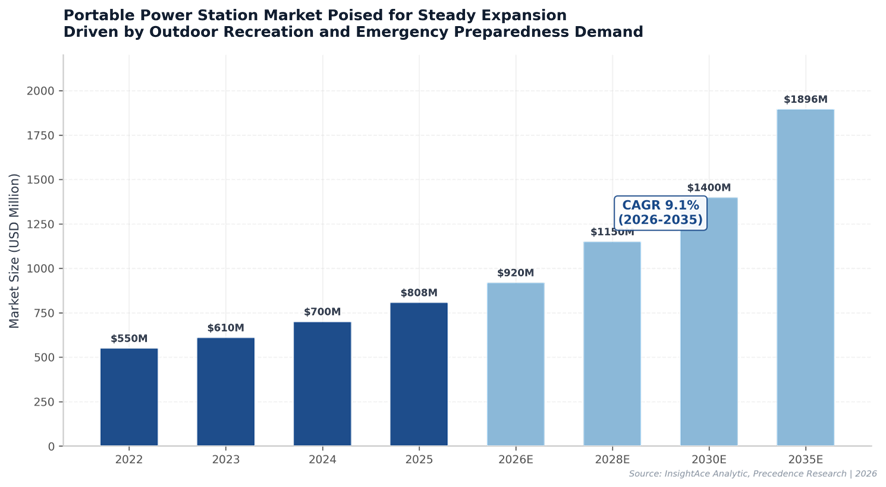
Figure 1: Portable Power Station Market Projected to Reach $1.9B by 2035
While portable power stations anchor EcoFlow's current revenue, the residential energy storage market represents a transformational growth opportunity. This market is valued at $18.5 billion in 2025 and projected to reach $68 billion by 2035 at a 13.9% CAGR. Key dynamics include declining PV and battery system costs making storage economically viable, phasing out of feed-in tariffs encouraging self-consumption, emergence of virtual power plant (VPP) programs allowing homeowners to monetize stored energy, and policy support including the U.S. Inflation Reduction Act's 30% Investment Tax Credit.
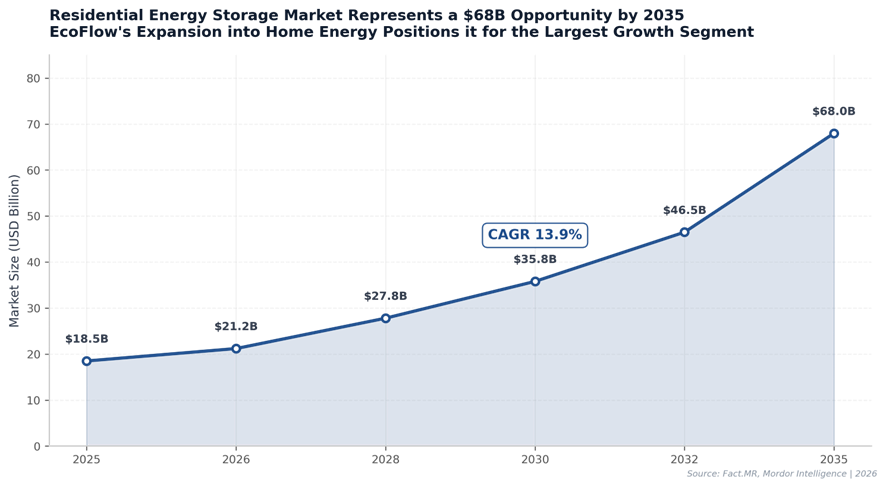
Figure 2: Residential Energy Storage Market—A $68 Billion Opportunity by 2035
North America dominates the portable power station market with a 42% revenue share in 2025, driven by the United States' unique combination of outdoor recreation culture, aging grid infrastructure, high natural disaster frequency, and strong consumer purchasing power. The U.S. market alone is estimated at $1.38 billion in 2025. Europe follows with approximately 28% share, supported by sustainability consciousness and caravan tourism, with Germany, UK, France, and Nordic countries as key markets. Asia Pacific holds 22% share but is the fastest-growing region, led by China's manufacturing base and growing consumer adoption.
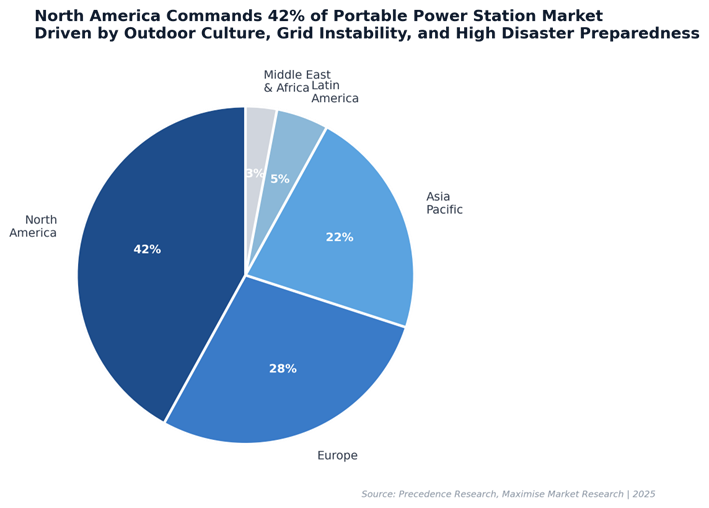
Figure 3: North America Commands 42% Market Share Driven by Emergency Preparedness
The portable power station market features three dominant players—EcoFlow, Jackery, and BLUETTI—each with distinct strategic positioning. EcoFlow competes on technology leadership (fastest charging, most sophisticated app ecosystem), Jackery on brand recognition and outdoor portability (longest track record, strongest camping affinity), and BLUETTI on capacity expandability and price-per-watt-hour value (largest battery configurations, best modular architecture). Anker Innovations and Goal Zero represent secondary tier competitors with narrower but well-executed product lines.
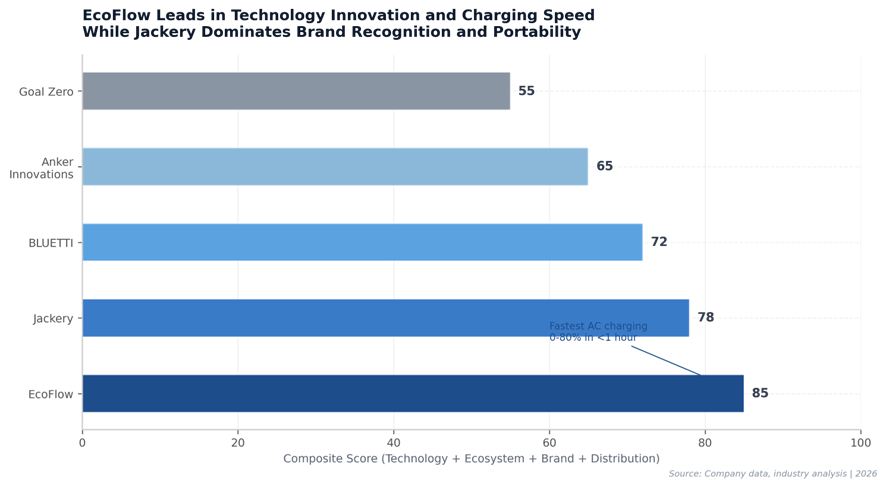
Figure 4: EcoFlow Leads on Technology Innovation; Jackery on Brand Recognition
Head-to-head specification comparisons reveal EcoFlow's technology advantages. The DELTA 2 charges 0-80% in approximately 50 minutes via AC, versus 1.5 hours for the comparable BLUETTI AC180 and 1.7 hours for the Jackery Explorer 1000 Plus. EcoFlow's X-Stream technology maintains this speed advantage across its entire product line. However, BLUETTI's modular expansion system supports up to 18,432Wh via six B300S batteries
, exceeding EcoFlow's DELTA Pro maximum of 10,800Wh. Jackery maintains portability advantages with lighter units at equivalent capacity tiers and the most integrated solar panel ecosystem through its proprietary SolarSaga panels.
|
Feature |
EcoFlow DELTA 2 |
BLUETTI AC180 |
Jackery 1000+ |
Winner |
|
Price |
$399 |
$499 |
$799 |
EcoFlow |
|
Capacity |
1,024Wh |
1,152Wh |
1,264Wh |
Jackery |
|
0-80%
AC Charge |
~50
min |
~45
min |
~1.7
hrs |
BLUETTI |
|
AC
Output |
1,800W |
1,800W |
2,000W |
Jackery |
|
Expandable |
Yes |
No |
No |
EcoFlow |
|
Warranty |
5
years |
5
years |
3
years |
EcoFlow/BLUETTI |
|
App
Quality |
Best-in-class |
Functional |
Basic |
EcoFlow |
EcoFlow organizes its product portfolio across two primary series. The RIVER series targets entry-level and portable applications with capacities from 245Wh (RIVER 3, $199) to 768Wh (RIVER 3 Max), optimized for camping, hiking, and light travel use cases. The DELTA series addresses mid-range to premium home backup needs, spanning the DELTA 3 (1,024Wh, $499) through the flagship DELTA Pro 3 (4,096Wh, $1,999). All current models utilize LiFePO4 battery chemistry rated for 3,000-4,000 cycles to 80% capacity, approximately tripling usable life versus legacy lithium-ion cells.
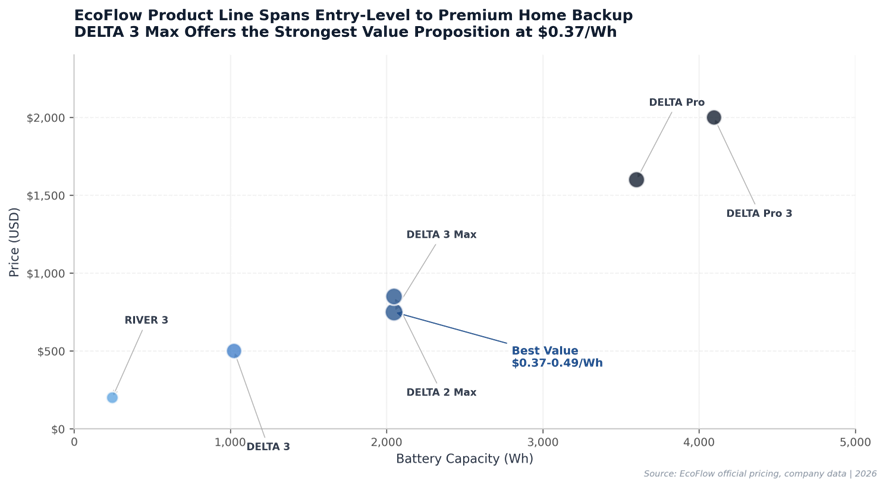
Figure 5: EcoFlow Product Portfolio Spans $199 Entry-Level to $1,999 Premium Home Backup
|
Product |
Capacity |
Price |
Price/Wh |
Best For |
|
RIVER
3 |
245Wh |
$199 |
$0.81/Wh |
Camping,
hiking |
|
DELTA
3 |
1,024Wh |
$499 |
$0.49/Wh |
RV,
light home backup |
|
DELTA
3 Max |
2,048Wh |
$749 |
$0.37/Wh |
Multi-day
outage |
|
DELTA
Pro |
3,600Wh |
$1,599 |
$0.44/Wh |
Home
backup |
|
DELTA
Pro 3 |
4,096Wh |
$1,999 |
$0.49/Wh |
Whole-home
off-grid |
EcoFlow's competitive moat is built on four proprietary technology pillars. X-Stream fast charging delivers AC charging speeds 3-5x faster than competitors by optimizing power electronics and battery management algorithms, enabling the DELTA 2 to charge 0-80% in under 50 minutes. X-Boost power scaling allows stations to run appliances exceeding their nominal rated output through intelligent power staging—critical for motor-driven devices like power tools and compressors. The EcoFlow Oasis app provides the most feature-rich mobile control experience in the category, enabling per-outlet power monitoring, charging scheduling, firmware updates, and smart home panel integration. AI-driven energy management, introduced in 2024-2025, optimizes consumption patterns and predicts solar generation based on weather forecasts.
The company maintains an intellectual property portfolio exceeding 1,000 global patents, with R&D investment representing 10-15% of revenue and a team of 500+ engineers focused on BMS, power electronics, and embedded software. Recognition includes multiple CES Innovation Awards and TIME Magazine's 100 Best Inventions designation for the DELTA Pro.
EcoFlow's growth strategy centers on four interconnected priorities. First, transitioning from a product company to a platform company by expanding software and energy-management SaaS offerings to build recurring revenue, improve gross margin stability, and increase customer lifetime value. Second, aggressively expanding into the residential energy storage market through the DELTA Pro ecosystem and Smart Home Panel 2, targeting the $68 billion TAM. Third, pursuing a U.S. IPO to access deeper capital markets and fund overseas manufacturing facilities that qualify for IRA incentives while reducing tariff exposure. Fourth, building B2B channels through certified installer networks (1,500+ and growing) and partnerships with homebuilders, RV OEMs, and telecom infrastructure providers.
The company's distribution strategy reflects its platform ambitions. Direct-to-consumer sales via its website contribute approximately 35% of revenue, enabling higher margins and first-party customer data. Amazon provides volume and discovery, with EcoFlow consistently ranking in the top three for 'Solar Generator' search terms. Big-box retail partnerships with Home Depot, Lowe's, and Costco extend reach across 5,000+ stores in North America and Europe. The certified installer channel, which grew investment by 60% in 2024-2025, supports service-integrated offerings and recurring revenue.
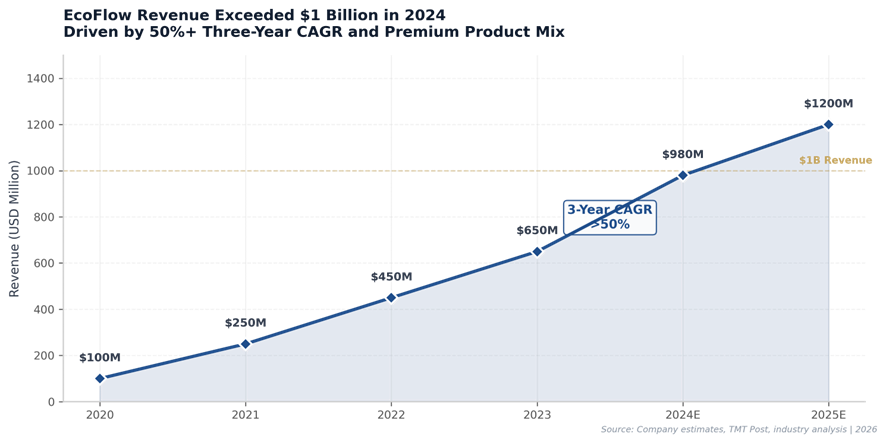
Figure 7: EcoFlow Revenue Trajectory—Exceeding $1 Billion in 2024 with 50%+ Three-Year CAGR